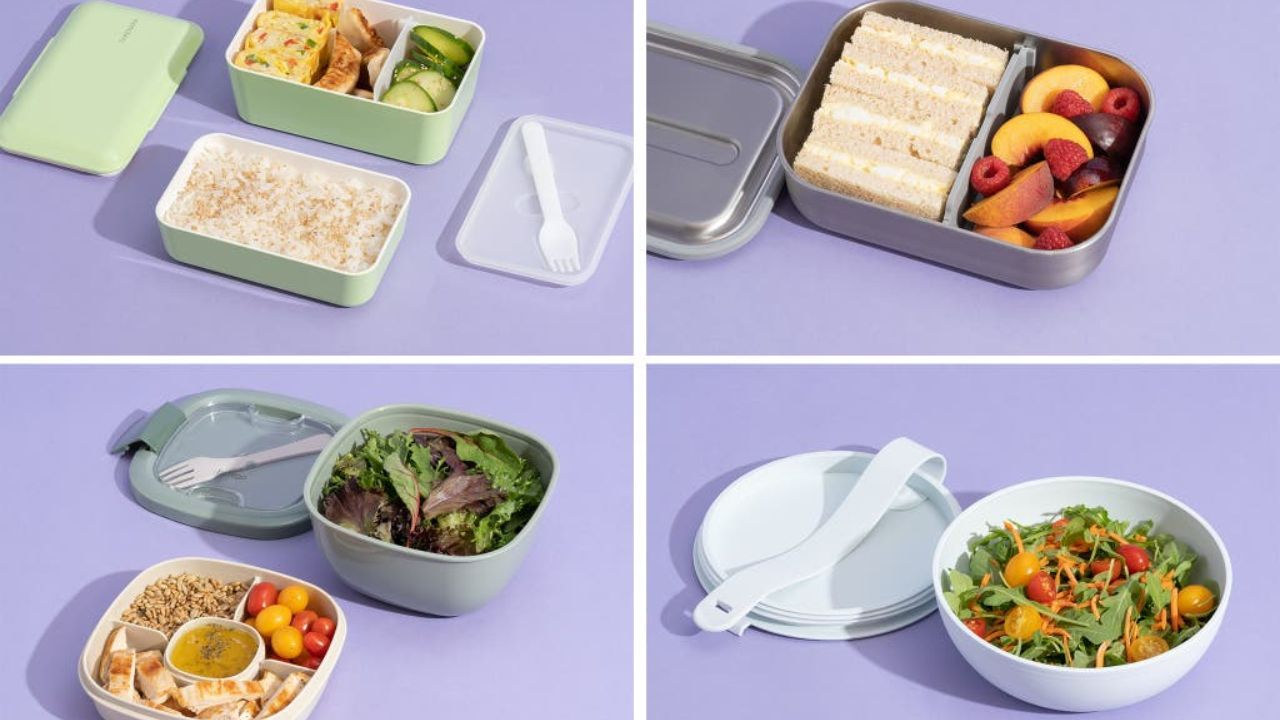
Retailers, distributors and brands can make a profitable decision by buying lunch boxes in large volumes, yet there are also challenges associated with the practice. Most buyers are price-conscious, and they do not pay attention to other important matters that influence the quality of products offered, customer satisfaction, and business sustainability. Being aware of pitfalls in the purchase of lunch box bulk can enable businesses to make more informed sourcing decisions and prevent such expensive failures.
Ignoring Food Safety and Material Standards
The first serious mistake is the inability to check the certification of food safety and its materials. Lunch boxes come in direct contact with food; as such, adherence to the international laws of safety is necessary. There are buyers who do not pay attention to the fact that products are BPA-free, of food-grade stainless steel or meet standards such as FDA or LFGB. Such negligence may cause legal liability, delays in customs or brand reputation losses. Trusted suppliers are open in terms of material sourcing and material safety testing.
Overlooking Customization and Branding Requirements
Most mass customers do not appreciate the significance of personalization in choosing a lunch box vendor. Selecting a manufacturer who would fail to handle logo printing, customization of colors, and packaging would put a brand at a disadvantage in a competitive market. Companies intending to develop their own label or branded products must make sure that the supplier has OEM and ODM capabilities. The neglect of taking this into consideration at an early stage may cause re-sourcing expenses and loss of market opportunities in the future.
Choosing a Supplier Without Production Capacity Verification
There is a widespread fallacy that every manufacturer is capable of dealing with huge or recurrent orders all the time. Other suppliers have difficulties in large-scale production, meeting deadlines or even consistent quality between batches. When a buyer fails to evaluate factory capacity, production lines, and the level of automation, they are likely to end up receiving late deliveries and production of inconsistent products. An efficient bulk supplier must be one that has a consistent production capacity and can manage increasing volumes of orders.
Not Requesting Samples Before Mass Production
Another mistake that can be avoided is not taking the sample stage, which most of the time does not pay off. The photos and descriptions of products are not always in accordance with the performance in reality. The buyers can fail to notice how the lids seal, whether the insulation is effective, or even the design of the compartment or the overall durability, without testing the samples. The sample testing enables the buyers to determine that the lunch boxes are within the functional expectations and the market needs before making a bulk purchase.
Underestimating the Importance of Quality Control
Other buyers believe that it is the work of the manufacturer to guarantee quality control and do not inquire about inspection measures. This may be an expensive assumption. Defects can not be detected without stringent quality checks, and it may be too late once products arrive at the customer. Suppliers who are professional use special teams of quality inspection, and the testing is conducted in accordance with standardized procedures. Buyers who do not take this into consideration normally experience poor shipments and high returns.
Misjudging Lead Times and Logistics Planning
Another typical problem is ineffective planning concerning production and shipping schedules. Buyers do not consider manufacturing lead times, peak seasons or international shipping delays. This error may result in a stock-out or loss of sales. Having clear communication on the production dates, shipping and delivery expectations assists a business in coordinating inventory planning with the demand in the market.
Failing to Consider Long-Term Supplier Partnerships
There are buyers who consider bulk buying as a transaction and not the start of a relationship. The cost can also go higher, and efficiency can be lowered in case of switching suppliers when there are small problems. A long-term partnership with a stable manufacturer of lunch boxes makes it possible to have a better price, greater personalization, and easier communication. These strategic benefits are usually lost by a business that does not consider its suppliers as its long-term partners.
Conclusion
Purchasing lunch boxes does not just involve a comparison of prices and pictures of products. Failing to make common mistakes, such as ignoring the quality standards, inability to provide samples, forgetting about the customization, and not valuing the reliability of the suppliers, can guarantee that businesses will not lose their money and reputation. It is through quality and safety, volume of production and long-term cooperation that buyers will be capable of making informed decisions that will allow them to develop in competitive markets over the long-term.
