Differences Between Micro V and Standard V Belts
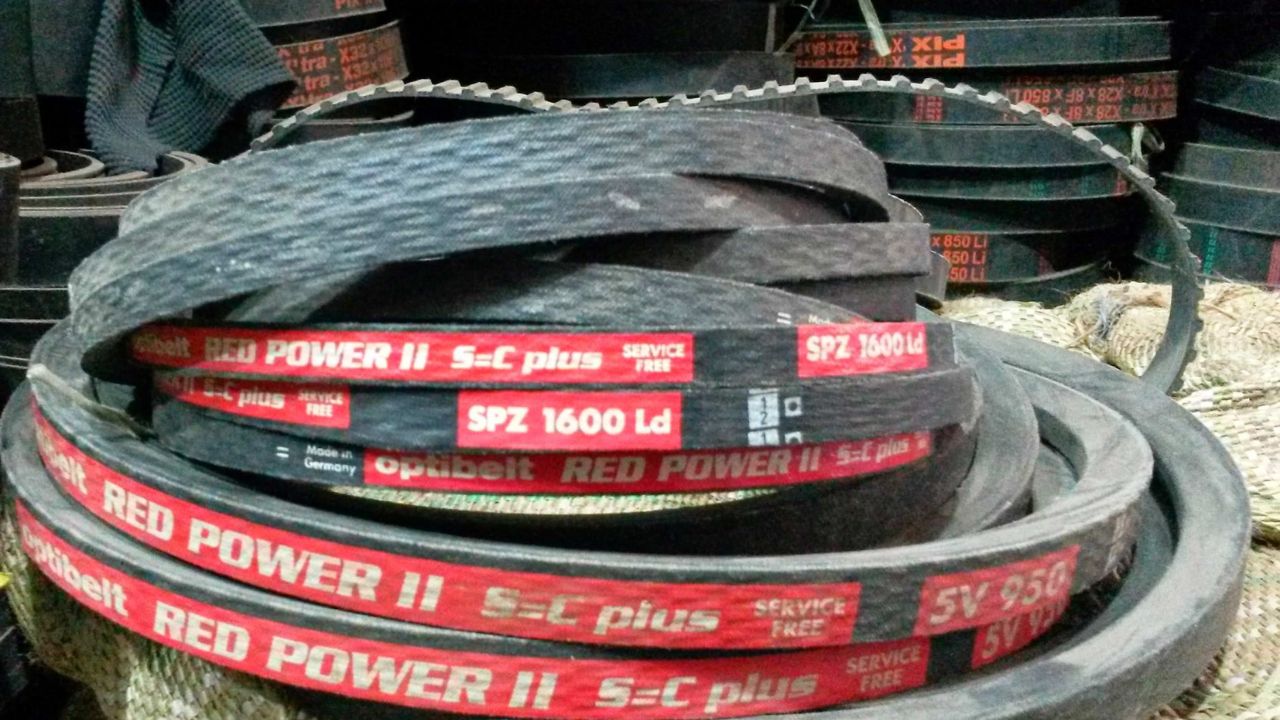
V belts have been a proven technology in mechanical power transmission, used in automotive, industrial, and agricultural machinery. Over the years, different types of V belts have been developed to meet the growing demands for compactness, efficiency, and higher power output. These innovations include micro V belts, also known as multi-ribbed or Poly V belts, which have become the leading choice due to their high flexibility and space-saving design. Even though a standard and a Micro V Belt fulfill the same basic function, they differ widely in structure, performance, and suitability for applications.
Construction and Structural Design
The most glaring distinction between the Micro V belts and the normal V belts is the physical structure of the belts. An ordinary V belt is trapezoidal in cross-section and fits into a corresponding V-shaped pulley groove. This design has a good grip and eliminates slippery contact because it has a good ability to transmit torque by means of wedging. Sometimes standard V belts are manufactured with rubber reinforced with polyester or fiberglass cords, which increase tensile strength and minimize stretch over time.
A micro V belt, on the contrary, has several longitudinal ribs passing across its inner side. The rib is V-shaped and is far smaller and shallower than a normal V belt. These ribs interact with similar grooves on the pulley, thus giving a high contact surface area, which enables transmission of power to be smoother and more effective.
Efficiency and Transmission of Power
Micro V belts have a unique edge when it comes to transmission efficiency in terms of power transmission. Their ribbed structure results in more than one point of contact with the pulley, thus reducing the load on the pulley to distribute the weight equally and reduce the amount of energy lost to slippage or friction. The result of this design is transmission efficiencies up to 98 percent, which enables the operation at higher speeds in silence and smoother operation.
Although standard V belts are effective in conveying moderate to heavy loads, they may result in more losses of friction, particularly when it comes to rotating at higher velocities or when the pulleys are smaller. They use mostly wedging action in transferring torque, and this can produce extra heat that eventually results in wear.
Elasticity and Pulley Design
The other distinguishing feature between the two types of belts is flexibility. Micro V belts can easily be bent so that they can be used on smaller pulley diameters without straining or deformation. Their attributes render them suitable for bending or multi-accessory drive systems, whereby the same belt is used to drive several components in a narrow space.
Comparatively, the V belts of standard thickness are thicker and less flexible. They have a higher diameter of pulleys that can work effectively and retain belt life. This restricts their usage in small systems but makes them extremely suitable for heavy-duty usage, where the belt thickness and grip are more significant than flexibility.
Application Suitability
Micro V and standard V belts can be used differently according to their performance characteristics. The micro V belts are typically applied in automotive serpentine systems, in which several accessories, including alternators, power steering pumps, and air conditioning compressors, are driven off one belt.
V standard belts, on the other hand, still prevail in heavy-duty industrial and agricultural machinery. They are applied in conveyors, compressors, lathes, and heavy machinery, which require high torque and strength. The standard V belts are made up of solid construction and have a thicker profile; thus, they are able to support more loads, tolerate misalignment, and work in very harsh environments.
Durability and Maintenance
Both micro V and standard V belts are designed to last long, but the life of both types of belts is determined by the conditions of usage. Although the micro V belts are efficient, they can wear faster when there are heavy shock loads, as they have a narrower profile. Nevertheless, they vibrate less and are more aligned, resulting in smoother operation and less wear of bearings.
Cost and Performance Issues
Standard V belts tend to be more cost-effective and simpler to acquire in terms of cost, and are therefore an economical solution to traditional machinery and industrial system configurations. Micro V belts, although being somewhat pricier, are more energy-efficient, have a higher life cycle in high-speed uses, and have lower maintenance costs in the long term. Even the investment in the micro V belts is, at first, usually justified by the increased reliability and reduced energy use.
Conclusion
The decision on whether to use micro V or the normal V belts hinges on the type of activities the system is expected to perform. The traditional V belts still dominate in the high-torque, heavy-duty machinery because they are economical and reliable in use in harsh environments. At the same time, micro V belts are best suited to the contemporary and small system situation where space, smooth running, and efficiency in transmission are critical.