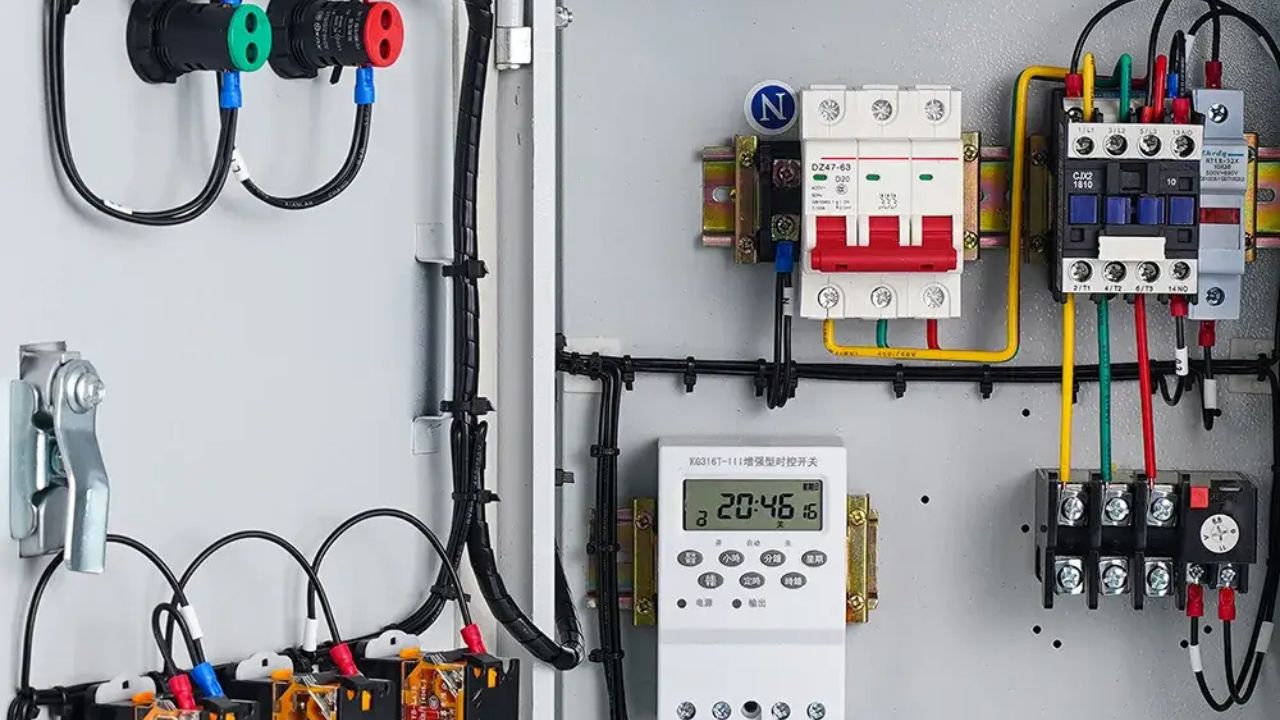
A Distribution board box, also referred to as a DB box, is the backbone of any electrical system. Its role is to distribute power safely and in a main supply to various circuits, safeguarding people and equipment in case of electrical faults. The selection of the appropriate db box cannot be made in a general fashion. The power needs, safety requirements, and the environment of homes, offices, and factories are very different. This means that the right type will be reliable, compliant, and safe in the long term.
Understanding the Role of a DB Box
A DB box is the point of control of an electrical installation. It stores protective equipment like MCBs, RCBOs, isolators, and surge protective units. Its main purposes are to subdivide the power coming in into individual circuits, to guard these circuits against overloading or short circuit, and to permit safe isolation in the event of maintenance or emergency. Since every electrical load requires the DB box, the structure and the capacity of the box have a direct impact on the performance and safety of the systems.
Choosing the Right DB Box for Homes
Residential electrical systems typically use a single-phase supply and carry quite modest loads. The number of circuits is the initial factor to be considered when choosing a DB box to use in a home. The common residential circuits are lighting, socket outlets, air conditioners, water heaters, and kitchen appliances. The DB box must have sufficient ways of fitting such circuits with some extra capacity in case of future requirements.
Residential installations are important for safety. Home DB boxes are expected to provide support to earth leakage protection in RCCBs or RCBOs, since this would be a major way of mitigating electric shock. The DB boxes are usually preferred to be built in-wall due to their sleek and modern look and easy accessibility found in houses. Standard IP-rated indoor DB boxes are generally adequate, though such systems must be used in dry and well-ventilated locations.
Selecting a DB Box for Offices and Commercial Buildings
The commercial and office scenarios present more complicated electrical demands than those of the homes. They are usually three-phase power-fed and are better balanced in terms of load balancing. Lighting, power outlets, HVAC systems, elevators, and other delicate electronics (servers, networking devices) are all common components of offices that need a number of circuits.
Capacity planning is necessary when selecting a DB box to be used in offices. The board should have more outgoing circuits that it is supporting, and which can be expanded to accommodate the increasing business activities. Surge protection is particularly important when it comes to commercial spaces because the burst of voltages may harm computers and communication systems. DB boxes mounted on surfaces are usually deployed in offices since they can be easily accessed during maintenance and upgrades. Correct labelling and internal organization are also significant in safe and efficient operation.
DB Box Requirements for Factories and Industrial Facilities
The strongest DB box solutions are required in the factories and industrial facilities. Heavy machines, motors, and high starting currents usually characterize these conditions. DB boxes in the industrial setting are required to be constructed to accommodate large electrical currents and high-frequency switching without overheating or mechanical breakdown.
In industries, DB boxes tend to utilize MCCBs as incomers and strenuous busbar systems to allocate power effectively. Metal enclosures are usually the most preferred enclosures because they can be used in conditions that are too harsh. The frequently encountered problems in factories are dust, heat, vibration, and moisture, and thus, the DB box should be rated IP appropriately and sufficiently ventilated or closed. Enclosures are also necessary and should be lockable to exclude unauthorized access and also make workplaces safer.
Importance of Environmental Conditions and Installation Location
This is because the installation environment is central to the choice of DB box in all applications. Installations in the indoor setting do not necessitate such high IP requirements, whereas in an outdoor or semi-outdoor area, the enclosure has to be weatherproof to survive. In order to resist humidity, dust, or direct sunlight, the DB box should be structured with proper sealing, UV-resistance, and anti-corrosion. Any neglect of the environmental factors may result in early failure and high safety problems.
Conclusion
To select the correct DB box to fit homes, offices, and factories, one needs to have a clear idea of the electrical load, safety requirements, environmental conditions, and future growth. The residential installations are more concerned with personal security and beauty, offices with capacity and the ability to protect delicate equipment, and factories with longevity and high-current functioning. Not only does a properly chosen DB box protect electrical systems, but it can also provide reliability, compliance, and long-term operation safety of any building of any type.