How China's Kitchen Cabinet Industry Developed the Export Capability It Has Today
China’s position as a major source for kitchen cabinets in international markets didn’t emerge quickly or automatically. The industry went through a series of distinct phases — from basic assembly work for foreign brands, through the development of domestic manufacturing capability, to the current situation where a significant segment of Chinese manufacturers can supply international projects at competitive quality levels. Understanding that evolution helps explain why sourcing from China looks different today than it did fifteen or twenty years ago, and what has and hasn’t changed.
The early phase: OEM production for foreign brands
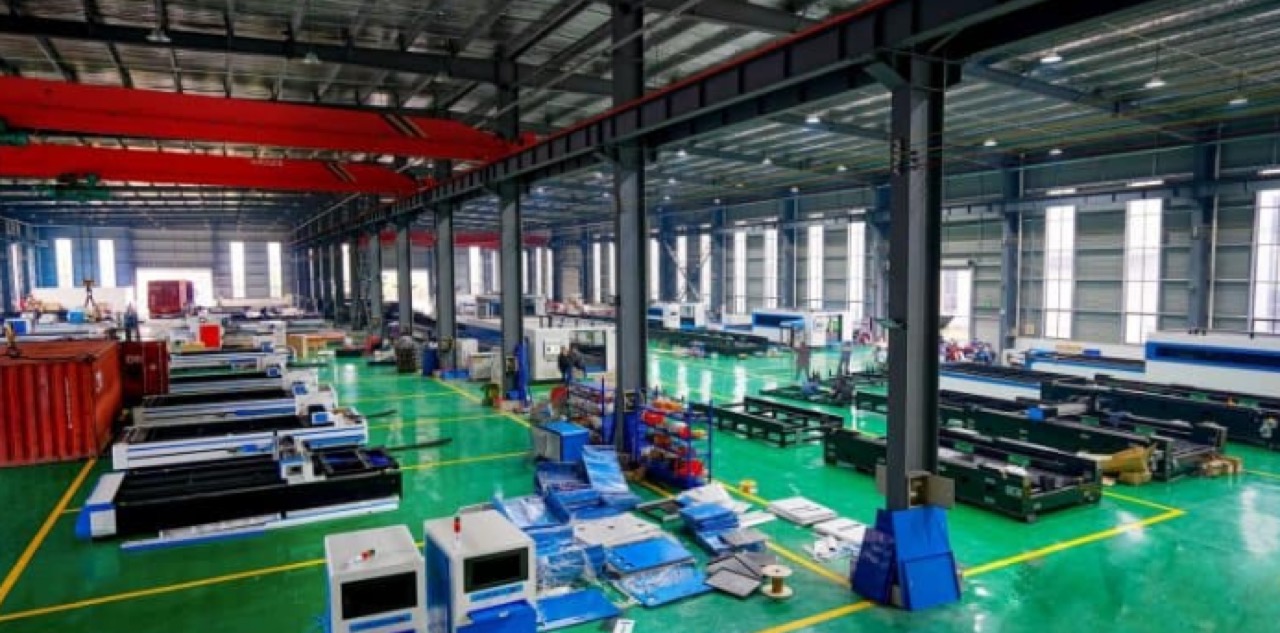
China’s furniture manufacturing industry grew initially around original equipment manufacturing (OEM) for foreign brands. Western kitchen and cabinet companies outsourced production to Chinese factories to take advantage of lower labor costs, with the finished products shipped back for sale under the Western brand. The factories in this model were executing a foreign company’s design and specification, using imported materials and hardware, and selling at a margin that reflected their position as a production vendor rather than a branded supplier.
This phase built significant manufacturing capability — the factories learned precision cutting, assembly, finishing, and logistics management — but it didn’t build design capability, materials development, or the understanding of end-market requirements that comes from selling directly to international buyers. The knowledge that accumulated was production knowledge, not market knowledge.
The transition: domestic market development
As China’s domestic consumer market grew through the 2000s and into the 2010s, demand for kitchen cabinets within China expanded significantly. Rising urban incomes, the rapid growth of the apartment market, and a wave of new construction created demand for kitchen products at a scale that the domestic market had never previously required.
This domestic market development changed the structure of the industry. Manufacturers who had been OEM producers began developing their own brands and distribution networks for the Chinese market. The competition for domestic market share drove investment in design, product development, and retail infrastructure that the OEM phase hadn’t required. Factories that had previously been executing foreign designs began building internal design teams capable of developing original products.
The domestic market also created scale that improved manufacturing efficiency and materials procurement leverage. A factory serving millions of Chinese consumers has different supply chain relationships and production economics than one that was previously producing small export runs for a few foreign clients.
Building export capability on a new foundation
The export capability that chinese kitchen cabinet manufacturers have developed in recent years is built on a different foundation than the original OEM phase. Where the first generation of exports was essentially foreign-designed product made in China, the current generation involves Chinese manufacturers supplying their own designs, with their own materials systems, to international buyers who are purchasing the product rather than directing its production.
This shift required investment in several areas that weren’t necessary in the OEM model. International certification — CARB Phase 2 for formaldehyde emissions, CE marking, LFGB compliance for food-contact surfaces — became necessary because international buyers require it as a baseline rather than a negotiable option. Maintaining these certifications required investment in quality management systems, third-party laboratory relationships, and documentation infrastructure that OEM manufacturers didn’t need when the foreign brand managed compliance on its end.
Design investment also became necessary. Competing for international buyers on product merit — rather than on price alone for a specification provided by the buyer — requires a design team capable of producing products that meet international aesthetic and functional standards. The manufacturers who invested in this capability over the sustained period required to develop it are the ones who now have genuine design credibility with international buyers.
The role of regional clustering
China’s furniture manufacturing industry is geographically concentrated, and this concentration has accelerated capability development in ways that dispersed manufacturing cannot. In Guangdong Province — the center of China’s furniture export industry — the density of manufacturers, hardware suppliers, materials distributors, design schools, logistics providers, and compliance consultants creates a knowledge-sharing and talent circulation environment that develops the industry faster than its component firms would develop individually.
A quality engineer who learns the latest QC methods at one factory carries that knowledge to the next employer. A compliance consultant who develops expertise in European formaldehyde standards serves dozens of manufacturers in the same cluster. A hardware supplier who begins stocking international-grade components for one premium manufacturer makes them available to the entire cluster.
This ecosystem effect means that manufacturers in well-developed clusters benefit from collective capability development even when their individual investment in a specific capability is modest. It also means that the gap between manufacturers within a mature cluster and those outside it is significant — a factory in a developed furniture cluster has access to suppliers, talent, and knowledge that a geographically isolated factory does not.
What has and hasn’t changed
The capability trajectory of China’s kitchen cabinet industry is real, but it isn’t uniform. The segment of manufacturers who have made the investment in design, certification, quality management, and export logistics has developed genuine capability that compares favorably with international alternatives on most criteria relevant to mid-to-high specification projects.
A large segment of the industry has not made this investment and competes primarily on price for buyers whose primary criterion is cost. The product from this segment looks similar in catalog photos to the product from better-equipped manufacturers, and the price is lower. The quality difference is visible in use rather than in a photograph.
The practical implication for international buyers is that manufacturer selection within China requires qualification at the manufacturer level, not just confidence in the country of origin. The industry has developed the capability to supply well — but that capability isn’t evenly distributed, and the buyer’s job is to identify which manufacturers have developed it and which haven’t.
The trajectory of the industry suggests the capable segment will continue to grow. The investment cycle — domestic market revenue funding design and certification investment, which enables better export positioning, which funds further investment — is self-reinforcing for manufacturers that have entered it. The gap between the capable segment and the commodity segment is likely to widen rather than close, which means the quality of the sourcing decision becomes more important as the range within the market broadens.